
People who type chicken road stake into a search bar usually want a quick yes or no, but the honest answer needs a little sorting first. Stake runs its own crossing title called Chicken, while the Chicken Road that made the genre famous comes from the studio InOut Games. This page skips the general casino tour and looks at practical things instead: how to tell the two apart on screen, what the lane count of each level does to your odds, what a 2% house edge costs in euros and why signal channels promising sure wins are a trap.
Everything on this page is meant for readers who are 18 or older. None of it invites you to open an account; the goal is to help you understand a game before any money is involved.
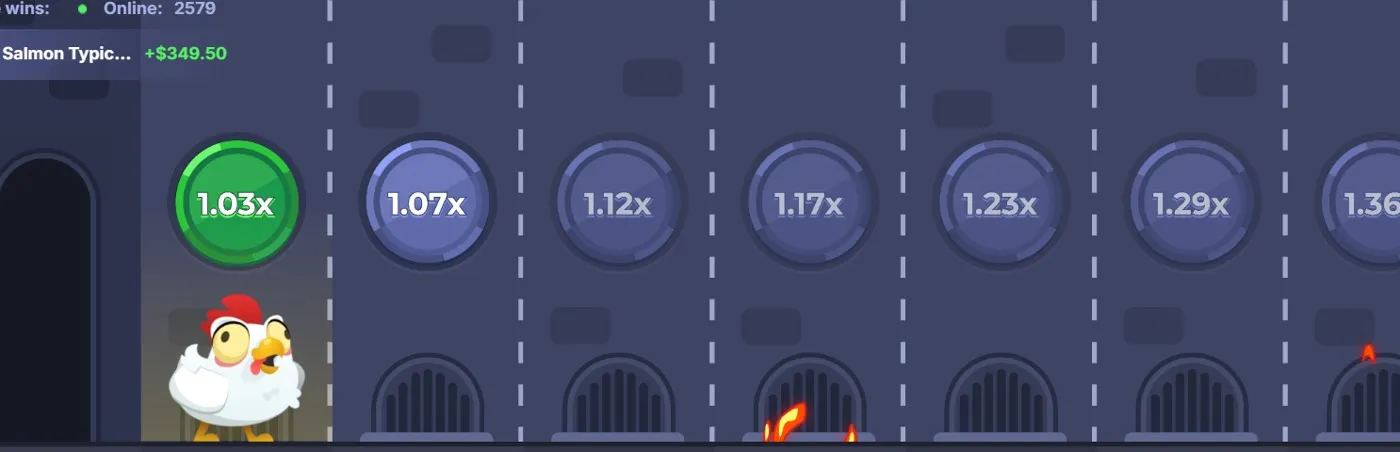
Original or Studio Release: Reading the Stake Lobby
Two tiles with a chicken on them can sit a few rows apart, so the first job is identification. The in-house game is filed under Stake Originals and carries the plain name Chicken. Any title produced by an outside developer shows that studio’s name on the tile or inside the game info panel. If the panel names InOut Games, you are looking at the studio version; if it says Stake Originals, you are not, whatever an advert or a video thumbnail suggested.
InOut’s Page in the Stake Catalogue
Stake’s catalogue does contain an address reserved for InOut’s Chicken Road, yet a saved copy of that page displayed a game not found notice. In plain terms, whether the studio version opens for you depends on your region and on the licensing deals in force at the moment you visit. InOut released the original on 4 April 2024 with a 98% RTP and four modes, Easy, Medium, Hard and Hardcore. Its sequel, Chicken Road 2.0, followed in April 2025 with a lower listed RTP of 95.5%.
Lane Count and Risk: The Four Chicken Levels in Numbers
Stake’s Chicken lists its RTP at 98%, matching the figure InOut quotes for its own game, but the levels are built differently. According to independent reviews, the track gets shorter as the difficulty rises, and each lane on a short track is worth far more because the chance of surviving it is lower. The table below collects the figures that reviewers agree on; values marked as in-game should be read in the game’s own paytable before you play.
| Level | Lanes to cross | Published top multiplier | What a session tends to feel like |
|---|---|---|---|
| Easy | 19 | 19.60x | Many small steps, frequent modest cash-outs |
| Medium | 17 | Shown in the in-game paytable | Steadier climb with noticeably sharper drops |
| Hard | 15 | Shown in the in-game paytable | Short runs, long gaps between decent results |
| Expert | 10 | 181,060.88x | Most rounds end in the first lanes; the ceiling is a rarity |
Turning the House Edge Into Euros
A 98% RTP means the game keeps about 2 cents of every euro wagered over a very long run. Play 100 rounds at 1 euro each and you have wagered 100 euros, so the long-run average cost of that session is roughly 2 euros. The catch is that a single evening is nowhere near the long run. On Expert the same 100 euros can vanish in a few minutes or, very rarely, turn into a large sum, and neither result says anything about the next session.
A Pre-Round Checklist for Euro Players
Stake.com is built around cryptocurrency, so a budget you think of in euros has to pass through a coin whose price keeps moving. That makes a fixed routine before the first round more useful than any strategy tip. Work through these steps in order:
Open the info panel and confirm which developer made the game in front of you.
Read the operator’s restricted-countries list and check what the law says where you live.
Set the bet amount to 0.00 and run a few dozen demo rounds on the level you plan to use.
Write down a session budget in euros and the coin amount it equals at today’s rate.
Use autoplay limits, such as a stop-loss and a cash-out target, before any real round.
If one of these steps cannot be completed, for example because the site is restricted in your country, the checklist has done its job: stop there rather than looking for a way around the block.
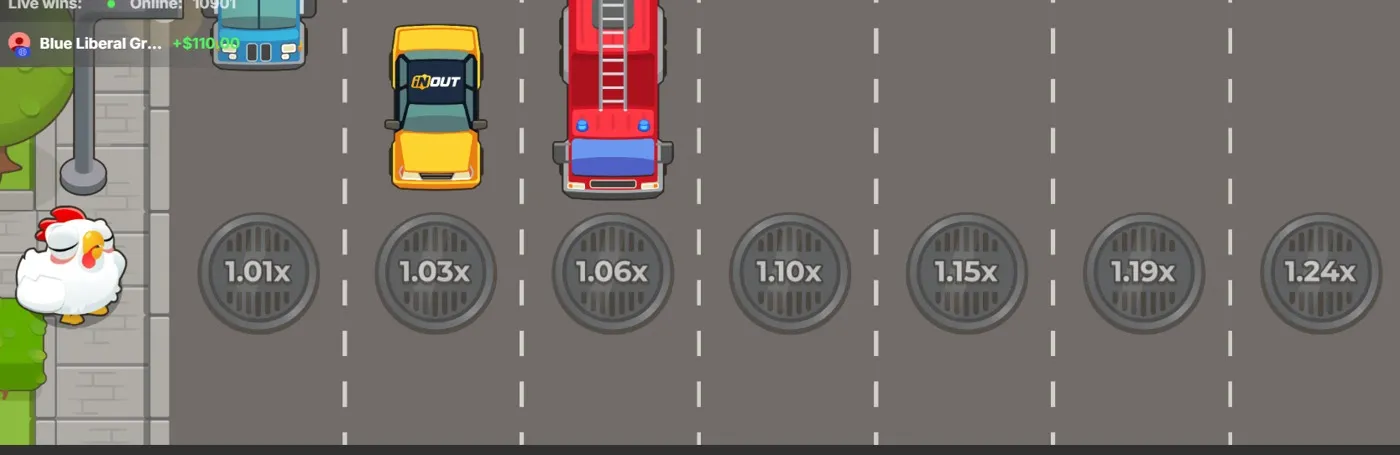
Why Predictor Apps and Signal Channels Cannot Beat It
Search results for the stake chicken road game are crowded with Telegram groups, bots and so-called predictors that promise to show which lane is safe. They all rest on ideas that do not survive a look at how the game decides each step. Watch out for these claims:
A tool that reads the next safe lane from the screen before you click.
Paid signals that tell you exactly when to cash out for a guaranteed profit.
Hacked or modded versions of the game shared as downloads outside the casino.
Patterns supposedly found by tracking the last twenty rounds of other players.
Requests for your login details so an expert can play the account for you.
Every one of these either costs you money up front or puts your account at risk. Each step is settled independently, so past rounds carry no information about the next one.
What Provably Fair Does and Does Not Prove
Stake’s Originals combine a client seed, a server seed that is shown only in hashed form, and a counter for each bet. Because the real server seed stays hidden until you change it, nobody outside the system can calculate the next outcome in advance. After the seed is revealed you can verify that past results were not altered. That proves the rounds were fair; it does not remove the 2% edge.
Licence, Location and Stake.us
Medium Rare N.V. runs Stake.com under a Curacao Gaming Authority licence, which appears in public records under number OGL/2024/1451/0918. That licence covers the company, not every market it can be reached from, so availability and licensing in your country remain your first check.
Two examples show how location changes the picture. The British white-label site, run by TGP Europe, was ordered to close by 11 March 2025 after the UK Gambling Commission intervened, and the main site does not serve the UK. American players see Stake.us instead, a sweepstakes platform that uses Gold Coins and Stake Cash and keeps its own list of excluded states.
Chicken Road Stake Pros and Cons
Weighed purely as a crossing game, the Stake version has clear strengths, while the downsides are mostly about access and money handling rather than the gameplay itself:
| Pros | Cons |
|---|---|
| The 98% RTP is published openly, and the short Expert track makes the risk of each level easy to grasp. | Access varies sharply from country to country, and neither UK nor US residents can use the main Stake.com site. |
| A zero-value bet turns the game into a free demo, so every level can be tested without spending money. | Crypto banking means a euro budget is exposed to coin price swings between a deposit and a withdrawal. |
| Autoplay accepts a stop-loss and a cash-out target, which helps you stick to rules decided in advance. |
If the second column outweighs the first in your situation, the same crossing format is available as InOut’s own demo or at an operator licensed by your national regulator.
Bottom Line: Chicken at Stake Without the Hype
The stake chicken road question has a two-part answer. What you will most likely meet is Stake’s own Chicken with four levels and a 98% RTP; InOut’s original may or may not load, depending on your region. Knowing which one is on screen matters, because their numbers are not interchangeable.
Beyond that, the useful habits are dull but effective: practise with a zero bet, translate your budget into euros before you start, set limits in autoplay and ignore anyone selling predictions. Stick to places where the law allows it for you, and use only money you can afford to lose.